
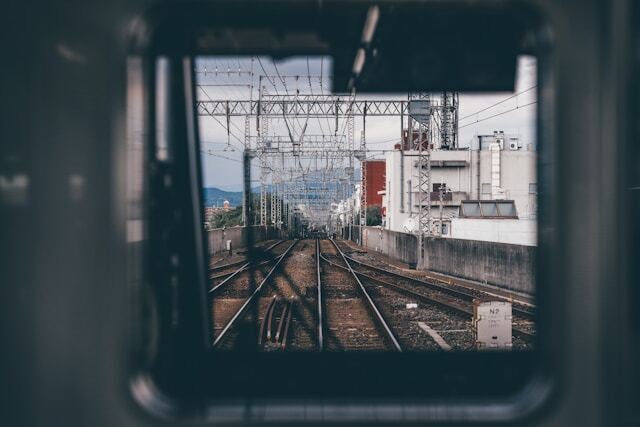
Railroad crossing accidents are a serious and ongoing safety issue in Illinois. Recent fatal car-versus-train collisions, particularly in 2024 and 2025, highlight the extreme dangers drivers face when crossing train tracks — and the important legal rights available to injured victims and their families.
Recent Train Accidents in Illinois
Many deadly train accidents have occurred across the state just in those two years. To name a few – In Elgin, October 23, 2025, a Union Pacific train hit a pick-up truck at State Street due to a warning device malfunction, killing the driver. In Harvey, on November 24, 2024, a freight train struck a vehicle, marking a deadly incident at a location previously noted for crossing violations. And in Christian County, on April 25, 2024, an RV was struck by a train on the eastern edge of the county, resulting in two fatalities.
These incidents underscore how quickly a routine drive can turn tragic when a vehicle encounters an oncoming train. Because trains cannot stop quickly, even minor misjudgments at railroad crossings can result in catastrophic outcomes.
Why Railroad Crossings Pose Serious Risks
Many Illinois railroad crossings lack active warning devices such as gates, flashing lights, or audible alarms. Instead, they rely on passive warning signs that may be difficult to see, especially at night, during bad weather, or when sightlines are obstructed by vegetation or nearby structures. Additionally, these warnings are called “passive” because they are stationary and inanimate, simply indicate that a railroad crossing is present, and do not activate and alert a motorist that a train is actually approaching. Most collisions occur at crossings marked only with passive warning signs, and Illinois is still far behind in upgrading its grade crossings.
“Active” devices provide a greater level of warning. Flashing lights and automatic gates, for example, are designed to flash and to lower, respectively, when a train is 20 seconds from entering the crossing. Active warning devices, however, are not foolproof. Common malfunctions are activation failures and delayed activations, both of which may deceive a motorist into driving onto the railroad crossing when an oncoming train is in dangerous proximity.
In some cases, drivers may become stuck or “high-centered” on “humped” tracks or miscalculate a train's speed and distance. Perhaps the train crew did not sound a proper horn warning of their approach, or the railroad allowed brush and trees around the crossing to grow unmaintained and block the motorist's views of an oncoming train. Sometimes, the blockage is caused by railroad structures and equipment, such railcars left on a parallel track next to the crossing. Regardless, when a collision occurs, the force of impact often leads to severe or fatal injuries. As professional engineers have explained: a freight train colliding into a car at high speeds is like your SUV running over a soda can.
Common Injuries in Train-Vehicle Collisions
Train accidents frequently result in life-altering injuries, including:
- Traumatic brain injuries (TBI);
- Broken bones;
- Torn ligaments;
- Spinal cord injuries;
- Paralysis.
Victims often require extensive medical care, rehabilitation, and long-term support. It is also not uncommon for death to result from those severe injuries. The seriousness of the damage is easy to understand when one considers that many train crossing collisions result in motorists being crushed in the vehicle or ejected from it.
Legal Rights After an Illinois Train Accident
Under Illinois law, individuals injured in a train accident — or families who have lost a loved one — may be entitled to pursue a personal injury or wrongful death claim. These cases often involve complex investigations into multiple factors, including:
- Whether warning signals or gates were present and functioning
- Obstructed sightlines at the crossing
- Compliance with safety regulations and class of track speed limitations
- Maintenance of the crossing by railroads or government entities
- Train horn warning and braking or deceleration activity.
While drivers are required to follow railroad crossing laws, railroads and responsible agencies also have a legal duty to maintain safe crossings and to operate their trains in a safe manner. When negligence contributes to an accident, injured victims may be able to recover compensation for medical expenses, lost income, pain and suffering, and other damages.
Preserving Critical Evidence
There are several key pieces of evidence that railroads are required to preserve in relation to grade crossing collisions resulting in serious injury and/or death. They include: (1) the event data recorder (“black box”); (2) the video and audio recording from the on-board video cameras (“Railview Cameras” and “Track Image Recorders”) at the front of the locomotive; and (3) the dispatch communications audiotapes. All three allow a reconstruction of the events leading up to, during, and after the collision from the train crew's perspective. Unfortunately, the railroads do not make the evidence available to the public and aggressively guard their disclosure even in court. Also, special software or equipment may be required to play the media, and an industry expert is needed to interpret the black box data.
When to Speak With a Illinois Train Accident Attorney
If you or a loved one has been injured in a train-related accident, it is important to understand your legal options as soon as possible. Never blindly accept reports that the motorist was “trying to beat the train” or “failed to yield.” An experienced Illinois train accident or personal injury attorney can help investigate the crash, preserve critical evidence, and protect your right to compensation. Our attorneys have been litigating railroad grade crossing collision cases in Illinois for decades and are here to help. Contact us through www.bautistaleroystl.com or call us at 833-381-6589 for a free consultation.



Comments
There are no comments for this post. Be the first and Add your Comment below.
Leave a Comment