
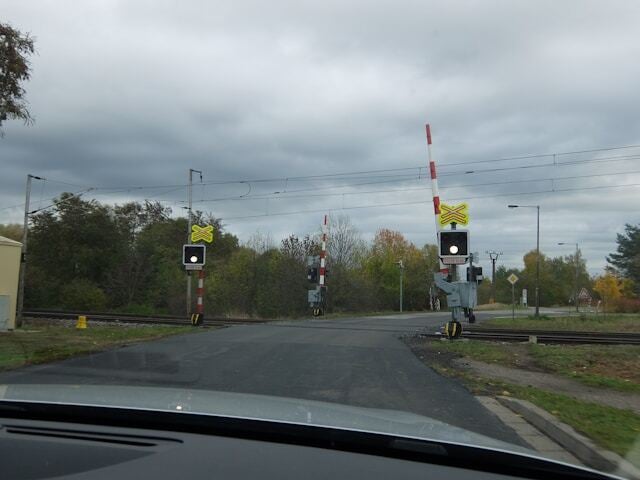
For decades, private railroad grade crossing collision cases have not been viable in Illinois because the Appellate Court of Illinois, 5th District, held railroads had no duty to motorists at these particular intersections in Pearce v. Ill. Cent. Gulf R.R. Co., 411 N.E.2d 102 (Ill. App. Ct. 1980). Personally, I recall declining several fatal grade crossing collision cases from Cook County and Madison County in the late 2000's. I am certain my colleagues, especially those officed in the State, turned down many more.
Having to reject these private grade crossing cases was painful. The damages were always high, as a high-speed freight train running into an SUV is like your everyday driver rolling over a soda can. And the liability aspects were in the plaintiff's favor because the railroads tend to ignore their safety obligations at private grade crossings, even though they are just as dangerous as public ones. There's also the bonus that Easterwood preemption is not a threat in private grade crossing cases, as federal funds cannot be appropriated to install or upgrade the warning devices at this type of grade crossing.
A few years ago, I was about to reject another fatal private grade crossing case, a double fatality from Pulaski County, when I stumbled upon Krefft v. Ill. Cent. R.R. Co., 2020 WL 11563947 (N.D. Ill. November 2, 2020).
Case Overview and Holding
Scott Krefft died in a collision between an Amtrak train and his car at a private grade crossing in Lemont, Illinois on April 3, 2019. His Estate subsequently filed the action against, inter alia, Amtrak and Illinois Central Railroad Company (“Illinois Central”) (the entity responsible for track and right-of-way maintenance) in the Federal District Court for the Northern District of Illinois. Id. at *2.
Illinois Central moved to dismiss the Estate's claims on the grounds it owed Krefft no duty to maintain a private crossing for someone who is not on the railroad for railroad business. The Court granted the Motion to Dismiss and dismissed the claims against Illinois Central with prejudice, reasoning Krefft was a mere licensee to whom Illinois Central owed nothing more than a duty to warn of latent dangers and to avoid causing willful or wanton injury. Id. at *3.
The Estate then moved for reconsideration of that Order, arguing the Court misunderstood the effect of the Illinois Supreme Court's decision in Best v. Taylor Mach. Works, 689 N.E.2d 1057 (Ill. 1997). The Court clearly misapprehended it and admitted as much. The Court, therefore, granted the Motion to Reconsider and vacated the previous Order granting the Motion to Dismiss. Illinois Central's Motion to Dismiss was instead denied. Krefft, 2020 WL 11563947, *3.
The Krefft Court held 740 ILCS 130/2 abolishes the invitee/licensee distinction and imposes a duty of reasonable care under the circumstances, rendering Krefft's “licensee” status immaterial. As the Court explained, under Illinois common law, Krefft was a “licensee” on the tracks by and through Illinois Central, and railroads owe no special duty of care to individuals crossing the tracks at a private crossing if the individual is a mere licensee. The Court went on to rationalize this common law rule had been abrogated by the Illinois Legislature's enactment of 740 ILCS 130/2, which eliminated the common law distinction between invitees and licensees. Id. at *4.
The Court also noted –though in error– Best found this statute unconstitutional and therefore the background common law principle remains in place (i.e., property owners owe licensees and invitees distinct duties of care). Having again evaluated Best, the Court now understood that decision found parts of the “Civil Justice Reform Amendments of 1955,” Public Act 89-7, to be unconstitutional. The Illinois Supreme Court invalidated the entire statute as incapable of being severed from the flawed provisions. Best, 689 N.E.2d at 1106. Public Act 89-7 amended 740 ILCS 130/2, the statute relevant to the case. Under Best, those amendments were void. Krefft, 2020 WL 11563947, *4.
But the first two sentences of 740 ILCS 130/2 were not part of the amendments enacted through Public Act 89-7. Those sentences, which the Illinois legislature enacted in 1984 through Public Act 83-1398, read:
The distinction under the common law between invitees and licensees as to the duty owed by an owner or occupier of any premises to such entrants is abolished. The duty owed to such entrants is that of reasonable care under the circumstances regarding the state of the premises or acts done or omitted on them.
This provision was still effective, undisturbed by Best. Accordingly, the fact Krefft was a licensee of Illinois Central was inconsequential to the legal analysis. Krefft, 2020 WL 11563947, *5.
Treatment of Pearce v. Illinois Central Gulf R.R. Co.
Illinois Central relied on Pearce to argue no duty exists at private crossings for non-railroad business users. Illinois Central did not dispute the foregoing analysis, but argued the Court's dismissal should stand because under Pearce 411 N.E.2d at 102, a railroad owed no duty to maintain a private railroad crossing for someone who is not on the railroad for railroad business. Indeed, it was undisputed Krefft used the railroad crossing that day because he was performing work for Lemont Quarries, not for Illinois Central.
The problem for Illinois Central was that Pearce predated Public Act 83-1398. The case and the statute were plainly inconsistent. Pearce and other pre-1984 cases explain that “a mere naked license to enter and pass over an estate will not create a duty or impose an obligation on the part of the owner to provide against the danger of the accident.” Pearce, 411 N.E.2d at 107; see also Cunningham v. Toledo, St. Louis &W. R.R. Co., 260 Ill. 589, 103 N.E. 594, 596 (Ill. 1913); Atchison, T. &S.F.R. Co. v. Parsons, 42 Ill. App. 93 (Ill. App. Ct. 1891). Under Public Act 83-1398, whether someone has a “mere naked license” was irrelevant. Id. at *6. Railroads now owed common-law licensees the same duty of care as they owe invitees. Krefft, 2020 WL 11563947, *5.
Illinois Central's final argument –that the road leading up to the private crossing was a private road and more recent case law imposed no duty on railroads to maintain crossings located on private roads—was unavailing. Whether the road was indeed a private road was a disputed question of fact, which made the issue inappropriate for a motion to dismiss. Additionally, Illinois Central based its argument on Pearce and other cases relying on Pearce, such as Eaton v. Baltimore & Ohio R. Co., 555 N.E.2d 790, 793 (Ill. App. Ct. 1990), and the Court concluded Pearce was outdated. “In any event, these cases cite Pearce, which this Court interprets as bad law. That these later cases cite Pearce in dicta does not make Pearce good law.” Krefft, 2020 WL 11563947, *6.
Ultimately, the Krefft Court granted Plaintiff's motion to reconsider, vacated the prior dismissal, and denied Illinois Central's motion to dismiss.
Effect on Illinois Railroads' Duties at Private Grade Crossings
According to Krefft, railroads in Illinois owe entrants, including those at private grade crossings, a duty of reasonable care under 740 ILCS 130/2, regardless of invitee/licensee status. Pre-1984 common-law rules limiting duties to “mere licensees,” including Pearce's no-duty rule at private crossings for non-railroad purposes, do not control after the statute's abolition of the invitee/licensee distinction. Allegations of unsafe crossing conditions, inadequate warnings, obstructive vegetation, and prior similar collisions now state a plausible breach of the reasonable-care duty at private crossings in Illinois.
It does not appear Illinois courts have officially recognized the abrogation of Pearce discussed in Krefft. Krefft, after all, was decided by a federal district court applying Illinois law, and such decisions have no precedential authority over Illinois state courts. The reasoning of Krefft, however, was sound. And at least one other district court followed Krefft, agreed Pearce had been abrogated, and denied Illinois Central's attempt at summary judgment in a private grade crossing collision case in 2023. See, Gaudreau v. National Railroad Passenger Corporation, et al., 2023 WL 5388347, *2-3 (S.D. Ill. August 22, 2023).
The federal courts understand the abrogation of Pearce. The railroads have all but confessed it. See, Gaudreau, 2023 WL 5388347, *3 (“Illinois Central, no doubt knowing that Pearce was abrogated, argued that alternatively no duty was owed to Robertson as a trespasser.”). And it's only a matter of time before Illinois courts acknowledge it. Plaintiff's attorneys need to give a serious look at private grade crossing collision cases in Illinois again.
The author, Jose M. Bautista, is a partner at Bautista LeRoy LLC. Should you have any questions or wish to discuss the article, our attorneys can be reached at www.bautistaleroystl.com or 833-381-6589.


Comments
There are no comments for this post. Be the first and Add your Comment below.
Leave a Comment